
// ARTICLE
Wild Bounty Queen 2048 maths, step by step
One formula, one ladder, one ceiling — and what each is worth at your bet.
Return to player is the figure players ask for first, and the part of it you can inspect before you spin is printed inside this game: the symbol value, the number of ways it lands on and the rung the ladder has reached. Your casino’s game panel carries the figure for the build you open, one tap from the reels. Everything on this page is the machinery that figure describes.
How a win is counted here#
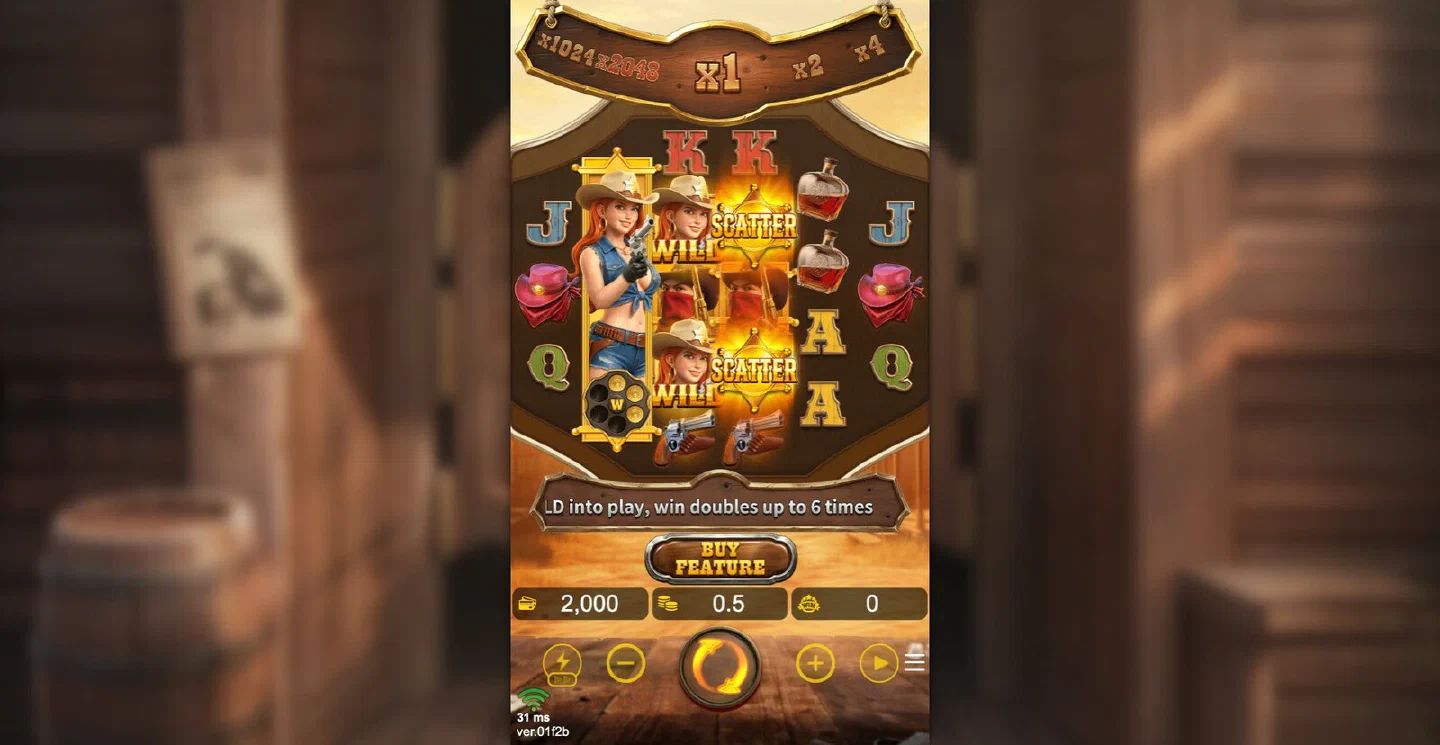
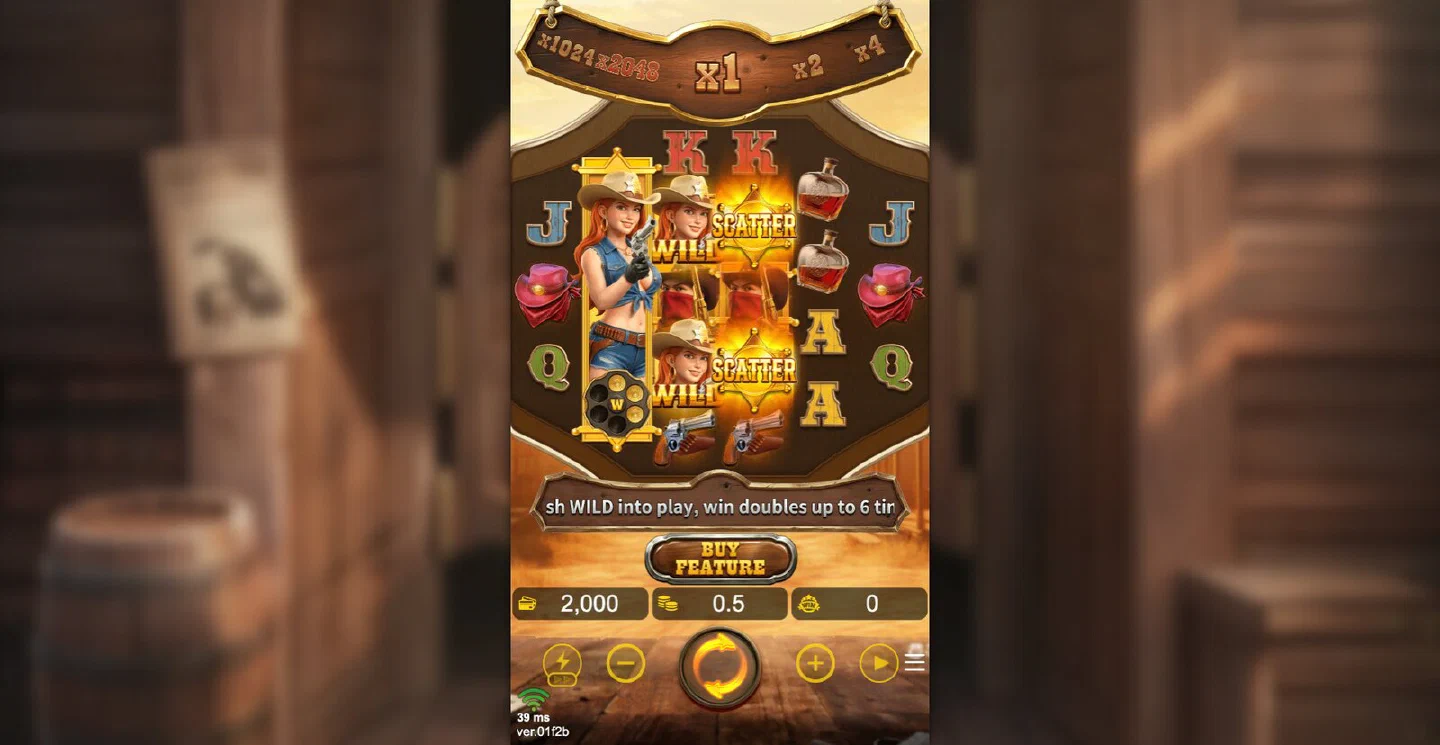
The grid is 3-4-5-5-4-3 across six reels: three symbols on the outside, four on reels two and five, five on the two in the middle. Wins run left to right and pay in ways, and the rule is a single sentence: the symbol value multiplied by the number of winning ways it lands on.
Work it with the top symbol. The masked bandit is worth 50 for four symbols. Land that combination on one way and it pays 50. Land it on two ways and it pays 100. Three ways, 150. Nothing is split across lines, nothing is divided by a bet-per-line figure, and there is a satisfying consequence: you can price a hit while the reels are still settling.
The same rule holds for the low symbols. A jack at four symbols is worth 5, so two ways make 10, small on its own, but the reason those symbols exist is what happens next. They clear the grid, new symbols drop, and the ladder moves up. The how to play page covers the control row that governs all of this.
The paytable, top to bottom#
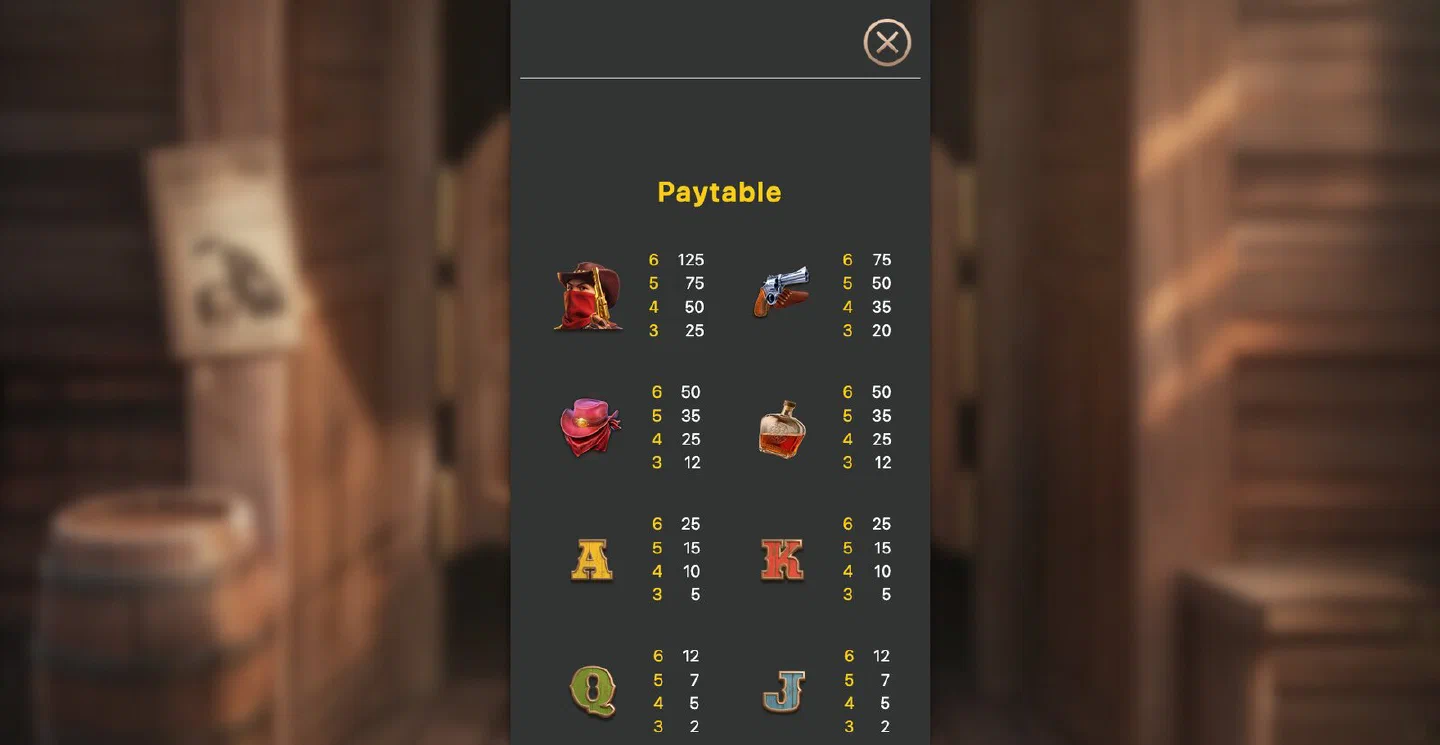
Eight symbols, four lengths each. The values below are per way, before the round multiplier is applied.
| Symbol | 6 | 5 | 4 | 3 |
|---|---|---|---|---|
| Masked bandit | 125 | 75 | 50 | 25 |
| Revolver | 75 | 50 | 35 | 20 |
| Hat | 50 | 35 | 25 | 12 |
| Whiskey | 50 | 35 | 25 | 12 |
| A | 25 | 15 | 10 | 5 |
| K | 25 | 15 | 10 | 5 |
| Q | 12 | 7 | 5 | 2 |
| J | 12 | 7 | 5 | 2 |
Read the top row against the bottom one. A bandit at six symbols pays 125; a jack at the same length pays 12, roughly a tenth of it. The premiums are what the round is aiming at, and the royals are the fuel that keeps a chain alive long enough for a premium to arrive with the ladder already climbing.
The middle of the table is where most rounds actually live. The revolver at four is 35, the hat and the whiskey at four are 25 apiece, and those are the values a two-way hit turns into 70 and 50. On a chain sitting at 4x, the same revolver hit is worth 140.
The ladder: 1x to 2,048x#
The cascade is the multiplier engine, and it is printed down the side of the grid so you never have to guess where you are. Twelve rungs, eleven doublings, and one rule underneath the whole thing: the ladder climbs only while the chain keeps paying, and the first drop that pays nothing puts it back to 1x for the next spin.
Here is the whole ladder, priced. The worked column takes one ordinary hit, a revolver across four reels on a single way worth 35, and shows what that same hit is paid at each rung.
| Rung | Paying drops behind it | A 35-value revolver hit pays |
|---|---|---|
| 1x | 0 | 35 |
| 2x | 1 | 70 |
| 4x | 2 | 140 |
| 8x | 3 | 280 |
| 16x | 4 | 560 |
| 32x | 5 | 1,120 |
| 64x | 6 | 2,240 |
| 128x | 7 | 4,480 |
| 256x | 8 | 8,960 |
| 512x | 9 | 17,920 |
| 1,024x | 10 | 35,840 |
| 2,048x | 11 | 71,680 |
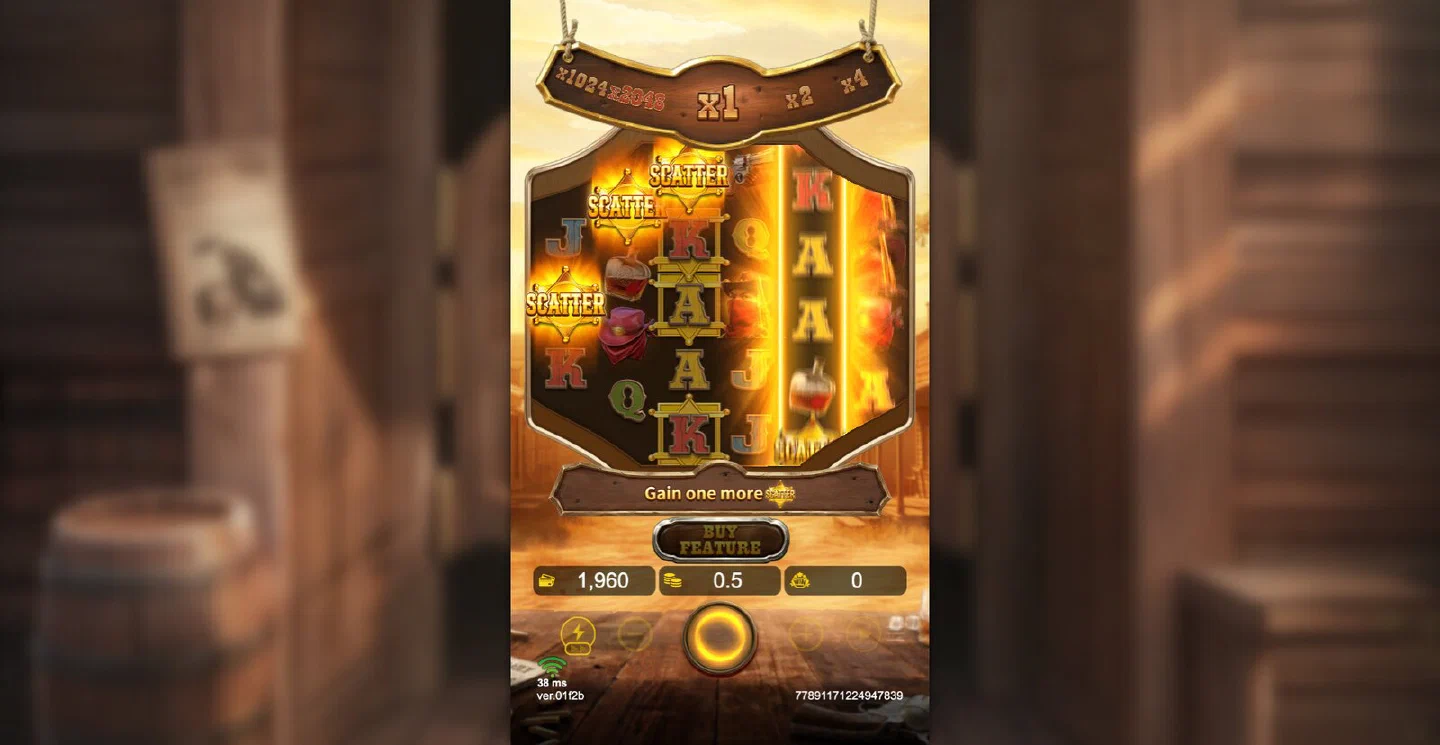
Read the middle of that table rather than the ends. The rungs everyone quotes are 1x and 2,048x, but the ones worth pricing are 16x and 32x: four and five paying drops behind them, and already a revolver paying 560 or 1,120 where a cold hit pays 35. Put the top symbol through the same rungs and the scale is plainer still: a masked bandit across four reels on two ways is 100 cold, 1,600 at 16x and 3,200 at 32x. The bottom half of the ladder is where the arithmetic starts working; the top half is where it stops being arithmetic and starts being a story.
That is also the precise value of the Free Game. It opens on 8x, so the feature begins on the fourth rung with three doublings already behind it. From there the top of the ladder is eight paying drops away instead of eleven: the same climb without its slowest opening. The features page covers how the bullets and gold frames keep chains running long enough for that to matter.
Bets and what each step costs#
Your bet sets the price of everything else on this page. The total bet runs from 0.5 to 1,000, and it is assembled from a basic bet between 0.01 and 20, multiplied by a fixed bet multiplier of 50. The purchase price follows the same selected multiplier, which at the observed point works out at 80x the total bet.
| Total bet | Basic bet | Buy Feature at 80x |
|---|---|---|
| 0.5 | 0.01 | 40 |
| 50 | 1 | 4,000 |
| 500 | 10 | 40,000 |
| 1,000 | 20 | 80,000 |
The column on the right looks dramatic and says something reassuring: the purchase is a constant multiple of your own stake, so it stays in proportion wherever you stand. A player at the bottom step and a player near the top are buying exactly the same product at exactly the same price relative to their bet: 8 Free Games opening at 8x, with a locked WILD collecting a bullet every spin. At the top of the bet range the purchase opens when the client’s limit covers the extra bet, so the bet multiplier and the price of the feature are chosen together.
One practical note on the rule: the purchased round runs on the bet multiplier held at the time of purchase, so set the stake you want before you press the button rather than after.
The ceiling: what 10,000x is worth#
The cap on a single round is 10,000x the bet, the same figure aggregators print as x10000.00. The prize here is the round itself, which means the ceiling is live on any spin rather than something an evening accumulates towards.
Convert it and the shape of the game becomes clear. At a total bet of 0.5 the cap is 5,000. At a total bet of 20 it is 200,000. At the top of the range, a total bet of 1,000, it is 10,000,000. Those are ceilings rather than targets, but they scale in exact proportion, which is the point worth carrying away.
The path there is a chain: premium symbols landing on several ways at once, on a grid seeded with gold-framed WILDs, inside a feature that opened at 8x and kept doubling. The ladder’s own maximum of 2,048x is a waypoint on that path, not the finish line, because the ladder multiplies symbol values that are themselves multiplied by ways. The strategy page turns all of it into stake planning, and the head-to-head with Wincent Wolf puts two 10,000x ceilings side by side to show how differently they are reached.
Four worked rounds#
Numbers behave better when you watch them do something. Four rounds, all at a 0.5 total bet, all built from the values above.
A single hit. Four hats land on one way. The hat is worth 25 for four, the ladder is at 1x because nothing has paid yet, and the round ends when the next drop pays nothing. The win is 25, and the ladder starts the next spin from the bottom again.
A three-drop chain. Queens clear first and pay 5 for four symbols on one way, taking the ladder to 2x. Aces follow at 10 for four, now riding 2x for 20, and the ladder moves to 4x. The revolver lands at 35 for four on two ways, which is 70, riding 4x for 280. The next drop pays nothing and the ladder resets. One ordinary chain turned a 35-value symbol into the biggest part of the round.
A six-drop chain. Same start, three more paying drops. The ladder passes 8x, 16x and 32x, and the bandit arrives last at 50 for four on two ways, worth 100 and riding 32x, which is 3,200 from one drop. Nothing exotic happened: six drops paid in a row, and the sixth one was worth thirty-two times what the first one would have been. That is the entire argument for the cascade.
A purchased feature. You pay 40, the feature opens at 8x, and the first paying drop is already multiplied eight times before the ladder starts doubling. A bandit at 50 for four on two ways is 100, riding 8x for 800, twenty times the purchase price from a single drop, with seven spins still to come and a locked WILD collecting a bullet on each of them. Let that same feature spin chain three drops and the ladder is at 64x, where the identical bandit hit pays 6,400.
None of those rounds is a promise; they are arithmetic on published values. What they show is where the money in this game actually comes from: not from a single lucky symbol, but from the rung the ladder has reached when a good symbol finally lands. The strategy page turns that insight into stake planning, and the features page explains the rules that keep chains alive.
Reading these numbers without fooling yourself#
This game pays in chains. A single drop is a small win; six paying drops in a row are a different round entirely, and the table above says by exactly how much. That rhythm is what the maths here describes, and it describes the game over a long run rather than your next twenty spins.
So use the table as a converter rather than as a forecast. Note which rung a round reached, multiply the symbol value by it, and the win on screen stops being a surprise. The demo page gives you 2,000 fun credits to practise that conversion for nothing, and the slot hub collects the rest of the game in one place before you open a real table.
18+. These numbers describe the game over a long run and never a single session. Pick your limit first, the responsible gambling page shows how.